1. Material Fundamentals and Architectural Residences of Alumina
1.1 Crystallographic Phases and Surface Area Characteristics

(Alumina Ceramic Chemical Catalyst Supports)
Alumina (Al ₂ O TWO), specifically in its α-phase type, is just one of the most commonly made use of ceramic products for chemical driver sustains as a result of its outstanding thermal stability, mechanical toughness, and tunable surface area chemistry.
It exists in several polymorphic kinds, consisting of γ, δ, θ, and α-alumina, with γ-alumina being the most common for catalytic applications as a result of its high specific surface area (100– 300 m TWO/ g )and porous structure.
Upon home heating above 1000 ° C, metastable transition aluminas (e.g., γ, δ) gradually change right into the thermodynamically secure α-alumina (diamond structure), which has a denser, non-porous crystalline lattice and significantly reduced surface area (~ 10 m TWO/ g), making it less appropriate for energetic catalytic diffusion.
The high surface area of γ-alumina occurs from its defective spinel-like framework, which has cation vacancies and permits the anchoring of metal nanoparticles and ionic types.
Surface area hydroxyl groups (– OH) on alumina work as Brønsted acid websites, while coordinatively unsaturated Al FIVE ⁺ ions serve as Lewis acid websites, enabling the product to take part directly in acid-catalyzed responses or maintain anionic intermediates.
These intrinsic surface buildings make alumina not merely an easy carrier yet an active contributor to catalytic devices in many industrial processes.
1.2 Porosity, Morphology, and Mechanical Stability
The performance of alumina as a stimulant support depends seriously on its pore structure, which regulates mass transportation, accessibility of energetic websites, and resistance to fouling.
Alumina supports are crafted with controlled pore size distributions– varying from mesoporous (2– 50 nm) to macroporous (> 50 nm)– to stabilize high surface area with effective diffusion of reactants and products.
High porosity enhances diffusion of catalytically energetic metals such as platinum, palladium, nickel, or cobalt, avoiding pile and maximizing the variety of energetic sites per unit volume.
Mechanically, alumina shows high compressive toughness and attrition resistance, essential for fixed-bed and fluidized-bed reactors where stimulant fragments go through prolonged mechanical stress and thermal cycling.
Its reduced thermal growth coefficient and high melting factor (~ 2072 ° C )ensure dimensional security under rough operating problems, consisting of elevated temperatures and harsh environments.
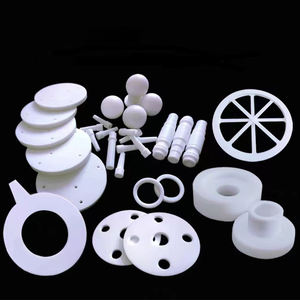
( Alumina Ceramic Chemical Catalyst Supports)
In addition, alumina can be made into numerous geometries– pellets, extrudates, pillars, or foams– to optimize pressure decline, warmth transfer, and activator throughput in large chemical design systems.
2. Role and Devices in Heterogeneous Catalysis
2.1 Energetic Metal Dispersion and Stablizing
One of the key features of alumina in catalysis is to work as a high-surface-area scaffold for distributing nanoscale metal fragments that work as active facilities for chemical improvements.
Via methods such as impregnation, co-precipitation, or deposition-precipitation, worthy or shift steels are uniformly dispersed across the alumina surface area, creating extremely dispersed nanoparticles with sizes commonly below 10 nm.
The strong metal-support interaction (SMSI) between alumina and metal particles enhances thermal security and hinders sintering– the coalescence of nanoparticles at heats– which would otherwise minimize catalytic task gradually.
For example, in oil refining, platinum nanoparticles supported on γ-alumina are crucial parts of catalytic changing drivers utilized to produce high-octane gas.
Likewise, in hydrogenation reactions, nickel or palladium on alumina promotes the enhancement of hydrogen to unsaturated natural substances, with the support protecting against bit migration and deactivation.
2.2 Promoting and Changing Catalytic Task
Alumina does not just serve as a passive platform; it actively affects the electronic and chemical actions of sustained metals.
The acidic surface area of γ-alumina can advertise bifunctional catalysis, where acid sites militarize isomerization, splitting, or dehydration actions while steel sites deal with hydrogenation or dehydrogenation, as seen in hydrocracking and changing processes.
Surface area hydroxyl teams can join spillover sensations, where hydrogen atoms dissociated on metal sites migrate onto the alumina surface, prolonging the area of sensitivity past the metal bit itself.
In addition, alumina can be doped with components such as chlorine, fluorine, or lanthanum to change its acidity, improve thermal stability, or improve steel diffusion, tailoring the support for details reaction settings.
These modifications permit fine-tuning of catalyst efficiency in regards to selectivity, conversion performance, and resistance to poisoning by sulfur or coke deposition.
3. Industrial Applications and Refine Combination
3.1 Petrochemical and Refining Processes
Alumina-supported catalysts are essential in the oil and gas market, specifically in catalytic splitting, hydrodesulfurization (HDS), and steam reforming.
In fluid catalytic cracking (FCC), although zeolites are the main active phase, alumina is typically included into the stimulant matrix to enhance mechanical toughness and supply second cracking websites.
For HDS, cobalt-molybdenum or nickel-molybdenum sulfides are supported on alumina to eliminate sulfur from crude oil fractions, assisting fulfill environmental guidelines on sulfur web content in fuels.
In steam methane changing (SMR), nickel on alumina catalysts convert methane and water right into syngas (H TWO + CO), a crucial action in hydrogen and ammonia production, where the support’s security under high-temperature heavy steam is vital.
3.2 Environmental and Energy-Related Catalysis
Beyond refining, alumina-supported catalysts play vital duties in discharge control and clean energy technologies.
In automotive catalytic converters, alumina washcoats function as the main support for platinum-group steels (Pt, Pd, Rh) that oxidize carbon monoxide and hydrocarbons and reduce NOₓ discharges.
The high area of γ-alumina makes best use of direct exposure of rare-earth elements, lowering the called for loading and total price.
In selective catalytic decrease (SCR) of NOₓ using ammonia, vanadia-titania catalysts are usually supported on alumina-based substrates to enhance resilience and diffusion.
Furthermore, alumina supports are being explored in arising applications such as carbon monoxide ₂ hydrogenation to methanol and water-gas change reactions, where their stability under lowering conditions is useful.
4. Difficulties and Future Development Instructions
4.1 Thermal Security and Sintering Resistance
A major constraint of standard γ-alumina is its stage improvement to α-alumina at heats, causing tragic loss of area and pore structure.
This limits its usage in exothermic reactions or regenerative processes entailing periodic high-temperature oxidation to remove coke deposits.
Study concentrates on maintaining the shift aluminas via doping with lanthanum, silicon, or barium, which inhibit crystal growth and delay stage makeover as much as 1100– 1200 ° C.
Another strategy involves developing composite assistances, such as alumina-zirconia or alumina-ceria, to incorporate high surface with improved thermal durability.
4.2 Poisoning Resistance and Regeneration Ability
Stimulant deactivation due to poisoning by sulfur, phosphorus, or hefty steels continues to be a difficulty in commercial operations.
Alumina’s surface can adsorb sulfur compounds, blocking active sites or reacting with supported steels to develop inactive sulfides.
Creating sulfur-tolerant solutions, such as utilizing standard promoters or protective layers, is essential for expanding driver life in sour atmospheres.
Similarly crucial is the capacity to restore invested drivers with managed oxidation or chemical washing, where alumina’s chemical inertness and mechanical effectiveness allow for multiple regeneration cycles without architectural collapse.
To conclude, alumina ceramic stands as a cornerstone material in heterogeneous catalysis, incorporating structural toughness with flexible surface area chemistry.
Its role as a stimulant assistance expands much past easy immobilization, actively affecting reaction pathways, improving metal dispersion, and enabling large-scale commercial procedures.
Ongoing advancements in nanostructuring, doping, and composite style continue to broaden its abilities in lasting chemistry and power conversion innovations.
5. Distributor
Alumina Technology Co., Ltd focus on the research and development, production and sales of aluminum oxide powder, aluminum oxide products, aluminum oxide crucible, etc., serving the electronics, ceramics, chemical and other industries. Since its establishment in 2005, the company has been committed to providing customers with the best products and services. If you are looking for high quality alumina al203, please feel free to contact us. (nanotrun@yahoo.com)
Tags: Alumina Ceramic Chemical Catalyst Supports, alumina, alumina oxide
All articles and pictures are from the Internet. If there are any copyright issues, please contact us in time to delete.
Inquiry us